
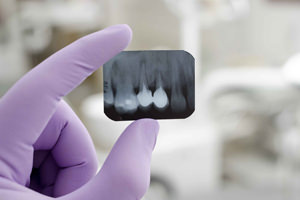
A root canal is needed when decay or trauma has irreversibly damaged the nerve inside a tooth. The nerve cannot heal itself, so the tooth either needs a root canal or must be extracted.
If it isn’t treated promptly, an extremely painful and dangerous infection called a dental abscess may develop. Root canal treatment removes the infection and lets you keep your natural tooth.
Signs You May Need a Root Canal
- A persistent or throbbing toothache
- Sensitivity to hot or cold that lingers
- Pain when biting or chewing
- Swollen or tender gums near a tooth
- A tooth that has darkened in color
- A small bump or pimple on the gum
Sometimes there are no symptoms at all, and the problem is found on an X-ray during a routine checkup.
Saving Your Natural Tooth
Keeping your own tooth is usually the best option when it can be saved. If a tooth can’t be saved, we’ll discuss an extraction and replacement options such as a dental implant.
The Root Canal Procedure
Exam & X-rays
We confirm the diagnosis and explain your options.
Numbing
Local anesthetic keeps you comfortable.
Cleaning the canal
The damaged and infected nerve tissue is removed and the canal is disinfected.
Sealing
The canal is filled with a sterile material to seal it from bacteria.
Protecting the tooth
For back teeth, we normally recommend a crown to strengthen and protect the tooth.
After Your Root Canal
- Some tenderness for a few days is normal.
- Avoid chewing hard foods on the tooth until it has its final restoration.
- Take any medications as directed.
- Call us if you notice swelling or worsening pain.
- Keep brushing, flossing and visiting us for regular checkups.

Why Patients Choose Dr. Holcombe for Root Canals
- Doctor of Dental Medicine (DMD) from East Carolina University; undergraduate studies at North Carolina State University
- Active member of the American Dental Association, Academy of General Dentistry, North Carolina Dental Society and Buncombe County Dental Society
- A small, family-owned practice where you see the same dentist every visit, led by Dr. Holcombe since 2018
- Personal care and long-term relationships: we take the time to listen, answer questions and explain your options
Root Canals: Frequently Asked Questions
Is a root canal painful?
Root canal treatment is done with local anesthetic, and its purpose is to relieve the pain caused by an infected or damaged nerve. Most patients feel some tenderness for a few days afterward.
Is it better to have a root canal or pull the tooth?
When a tooth can be saved, keeping it is usually best for chewing and for preventing neighboring teeth from shifting. If extraction is the better choice, we’ll discuss implants, bridges and partial dentures to replace it.
Will I need a crown after a root canal?
For back teeth, we normally recommend a crown, because a tooth that has had a root canal can become brittle and is more likely to crack.
What happens if I wait?
The infection won’t heal on its own. Waiting can lead to a dental abscess, more pain and a greater chance of losing the tooth.
How long will a tooth with a root canal last?
With a proper final restoration, good home care and regular checkups, a tooth that has had a root canal can last for many years.